
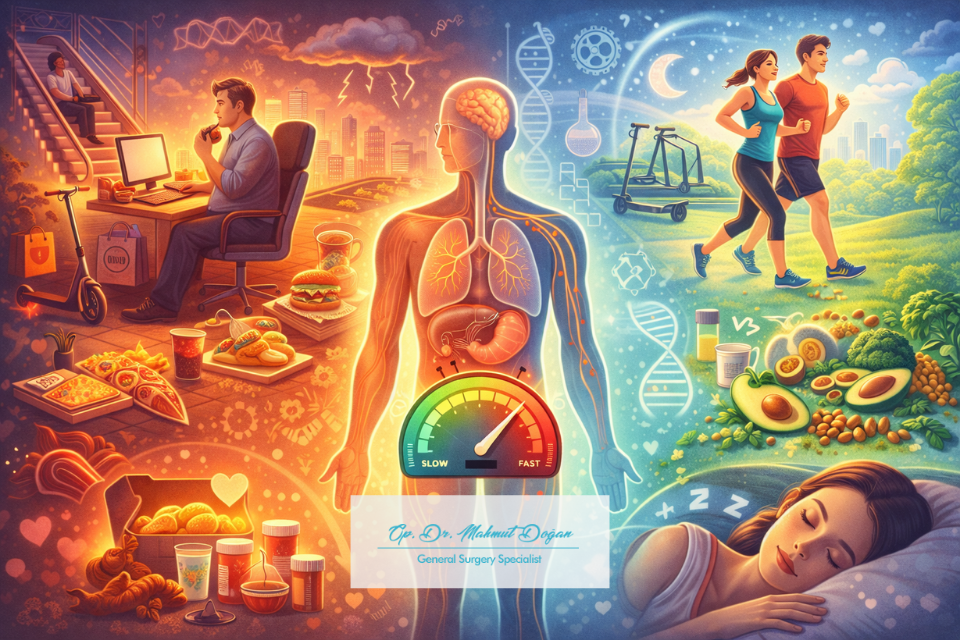
Modern lifestyle, eating habits, and stress levels have changed significantly compared to the past. Our ancestors had to struggle much more to find food. Although we share the same genes, our situation today is very different. On the contrary, access to food has become extremely easy and food diversity has increased dramatically. As a result, our metabolism — which works with food — has also undergone changes over time.
Let’s take a closer look at how the metabolic system functions in modern humans. Today, many people frequently say, “I eat very little but can’t lose weight” or “I can’t lose weight as quickly as before.” Has our metabolism really slowed down? Or has our lifestyle changed?
Our body needs basic functions to sustain life. Metabolism is the sum of all chemical processes that allow the body to maintain life. Breathing, digestion, cell renewal, hormone production, and energy expenditure are all part of metabolism.
Even when you are doing nothing, your body continues to function. Metabolic rate refers to the amount of energy your body uses while at rest. It is influenced by many factors such as age, gender, genetics, muscle mass, and hormonal balance.
Nutrition does play an important role in metabolic rate. However, it is not the only factor. Let’s examine the other contributing elements step by step.
1. Sedentary Lifestyle
With technological advancements, daily physical activity has significantly decreased. You can observe this even in crowded escalators at metro stations where stairs could easily be used.
Many of us work desk jobs and spend long hours in front of screens. Instead of going out for grocery shopping, we order through mobile apps. While technology makes life easier, it also reduces our movement. In the past, life was not such a race against time. Today, electric scooters and other quick transport options have replaced walking. Easier transportation has minimized the need for movement.
As movement decreases, muscle mass declines; as muscle mass declines, basal metabolic rate decreases.
2. Processed and High-Calorie Nutrition
Refined carbohydrates, sugary beverages, and ultra-processed foods cause rapid spikes in blood sugar. This can lead to insulin resistance and disrupt metabolic balance.
3. Chronic Stress and Cortisol
The intense pace of modern life keeps us under constant stress. Long-term elevated cortisol levels may increase fat storage and negatively affect metabolism.
4. Sleep Disorders
Insufficient and poor-quality sleep affects appetite hormones such as leptin and ghrelin. This can lead to increased appetite and metabolic slowdown.
5. Hormonal Imbalances
Thyroid hormones, insulin, and other metabolic hormones directly affect energy usage. Especially thyroid dysfunction can significantly reduce metabolic rate.
✔ Increase Muscle Mass
Resistance training and weight exercises increase muscle ratio. Muscle tissue burns more energy than fat tissue.
✔ Consume Adequate Protein
Protein has a high thermic effect. More energy is expended during digestion.
✔ Regular Sleep
7–8 hours of quality sleep per day is critical for hormonal balance.
✔ Stress Management
Meditation, breathing exercises, and regular physical activity help balance cortisol levels.
✔ Professional Evaluation
For persistent weight problems, metabolic analysis, hormone testing, and professional support may be necessary. Personalized planning is important for sustainable results.
Metabolic slowdown can contribute to long-term weight gain and obesity. Obesity is not merely an aesthetic issue; it is associated with serious health problems such as diabetes, heart disease, and hypertension.
World Health Organization defines obesity as a chronic disease and recognizes it as a major global public health issue.
Therefore, maintaining metabolic balance is critical not only for weight control but also for overall health.
Modern life may challenge our metabolism; however, with proper nutrition, regular movement, quality sleep, and professional support when necessary, metabolic balance can be restored.
Remember, your metabolism works with you — you just need to provide the right conditions.
13/06/2026 Obesity

06/06/2026 Obesity

04/06/2026 Obesity

15/05/2026 Obesity

09/05/2026 Obesity

02/05/2026 Obesity

25/04/2026 Obesity

18/04/2026 Obesity
Crafted with by

© Tüm hakları saklıdır.