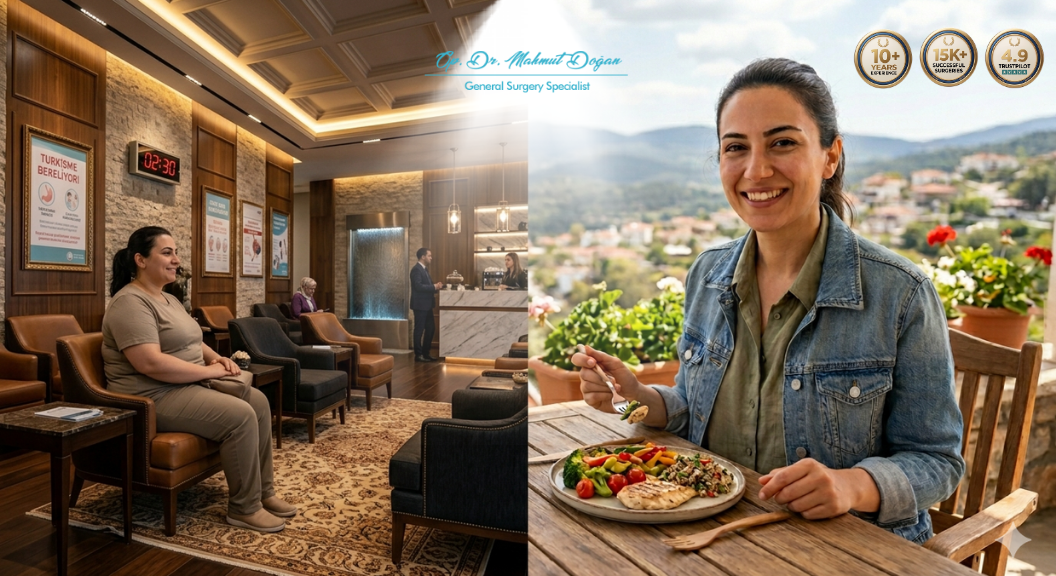

Today, we take a closer look at one of the most vital organs in our body—the liver, which stores toxins and protects us from heavy metals. Have you ever heard of the liver-shrinking diet, also known as the pre-operative liver reduction diet?
The liver-shrinking diet is a specialized nutritional program designed to reduce liver volume, especially before obesity surgery. It is implemented by avoiding foods that contribute to toxin accumulation in the liver. This diet helps make the preoperative process safer and more successful in bariatric surgery.
In patients with obesity, fat accumulation in internal organs is common. Although the liver is already the largest internal organ, it often becomes even larger in obese individuals due to fat buildup. This enlargement not only threatens overall health but can also limit the surgeon’s visibility during gastric sleeve and gastric bypass procedures.
The main goals of this diet are:
To reduce fat accumulation in the liver
To eliminate toxins stored in the liver
To decrease liver volume
To improve surgical visibility
To reduce surgery duration and risks
This diet is based on low carbohydrate, low fat, and high protein intake. When carbohydrate consumption is reduced, the body uses glycogen stored in the liver for energy. As glycogen stores are depleted, the liver loses water and fat content, resulting in a smaller liver size.
Although the liver-shrinking diet and the ketogenic diet share similar principles, they are not the same. Both restrict carbohydrate intake; however, the ketogenic diet is high in fat, whereas the liver-shrinking diet focuses on low fat and high protein intake. The goal of the liver-shrinking diet is not rapid weight loss but to reduce liver size before surgery and improve surgical safety. Therefore, it is applied for a limited period under medical supervision.
The liver-shrinking diet is usually applied for:
7 to 14 days
3–4 weeks in some patients
The duration depends on the patient’s weight, degree of liver fat accumulation, and the physician’s evaluation.
High-protein liquid or powdered protein supplements
Lean meat, chicken, fish
Eggs
Low-fat dairy products
Plenty of water and sugar-free beverages
Sugar and sugary foods
White bread, pasta, rice
Pastries
Fried foods
Alcohol
This diet is especially recommended for:
Patients preparing for gastric sleeve surgery
Patients preparing for gastric bypass surgery
Obese patients with fatty liver disease
It may not be mandatory for every patient, but most surgeons recommend it for preoperative safety.
If the liver-shrinking diet is not followed:
Surgery may become technically more difficult
Operation time may increase
Risk of bleeding and complications may rise
Surgery may need to be postponed
Therefore, strict adherence to the diet is crucial.
The diet should be followed under doctor or dietitian supervision
Daily protein intake must be adequate
Sufficient water intake is essential
Alcohol must be strictly avoided
The liver-shrinking diet is a critical preparation step that enhances safety and success in obesity surgery. By reducing liver size, it lowers surgical risks and facilitates a smoother operation. For this reason, it should be followed carefully according to medical advice.
13/06/2026 Obesity

06/06/2026 Obesity

04/06/2026 Obesity
15/05/2026 Obesity

09/05/2026 Obesity

02/05/2026 Obesity

25/04/2026 Obesity

18/04/2026 Obesity
Crafted with by

© Tüm hakları saklıdır.